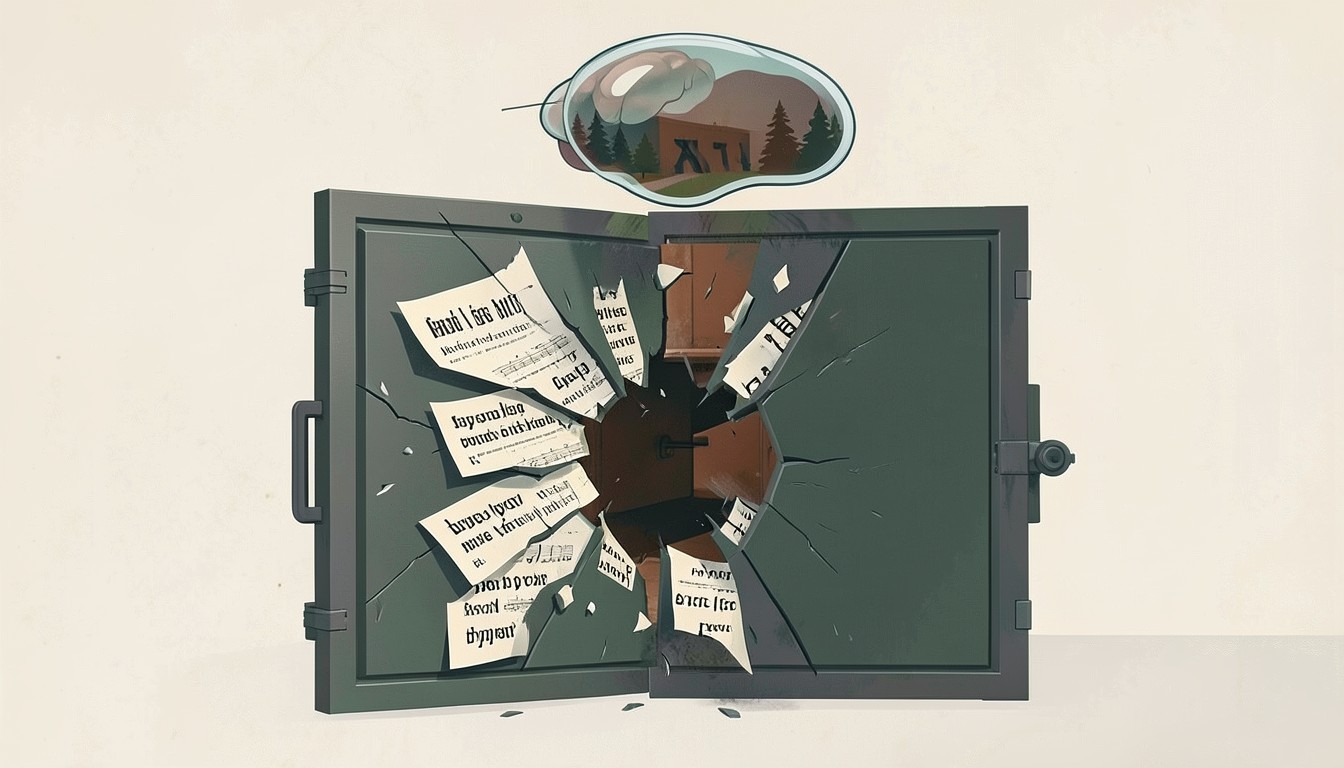
Sony Music Publishing and Warner Chappell filed a copyright lawsuit against Anthropic on 28 August in a California court, alleging the AI startup built its Claude models on “tens of thousands” of unlicensed songs and is now on the hook for damages that could reach billions of dollars. The case lands as Anthropic prepares a stock-market listing that could value the company at $2tn, putting a concrete price tag on the training-data risk that has dogged the generative-AI sector since its inception.
The claim and the calculus
The publishers allege Anthropic and its chief executive Dario Amodei, along with co-founder Benjamin Mann, “torrented, scraped and downloaded” lyrics from pirate sites and legal databases including Musixmatch, LyricFind and Common Crawl. The complaint cites at least 7m books downloaded from pirate websites, a figure drawn from a separate authors’ case Anthropic settled for $1.5bn, and says identifying metadata was stripped during processing. Statutory damages of up to $150,000 per work and $25,000 per metadata removal imply a floor of roughly $3bn if the “tens of thousands” of compositions means 20,000 works, before any multiplier for wilful infringement.
The precedent stack
This is not Anthropic’s first copyright fight. Universal Music Group and Concord Music Group have active claims. The authors’ settlement at $1.5bn established a benchmark, though the terms were not disclosed. In a parallel track this month, AI music generator Suno lost a German infringement case brought by licensing agency GEMA over songs including Boney M’s “Daddy Cool.” The pattern suggests rights holders are converging on a litigation strategy that treats training-data ingestion as a licensing event, not a fair-use grey zone.
The IPO overhang
Anthropic’s spokesperson said the company disagrees with the claims and will defend itself “robustly in court.” That is the standard posture, but the timing is awkward. A $2tn valuation thesis assumes clean IP title to the model weights. A multibillion-dollar liability, or a court-ordered retraining, would force a repricing of the offering or a carve-out for contingent liabilities. The publishers’ complaint frames the conduct as a deliberate choice to avoid licence fees, a characterisation that, if accepted, strengthens the case for enhanced damages and weakens any fair-use defence.
What to watch
Discovery will test whether Anthropic’s internal communications show intent to circumvent licensing. The metadata-stripping allegation, if proven, adds a separate statutory claim that is harder to dismiss on fair-use grounds. Meanwhile, the Suno-GEMA ruling in Germany may be cited as persuasive authority on whether training on protected works constitutes reproduction. For the IPO underwriters, the question is no longer whether the risk exists, but whether it is priced.