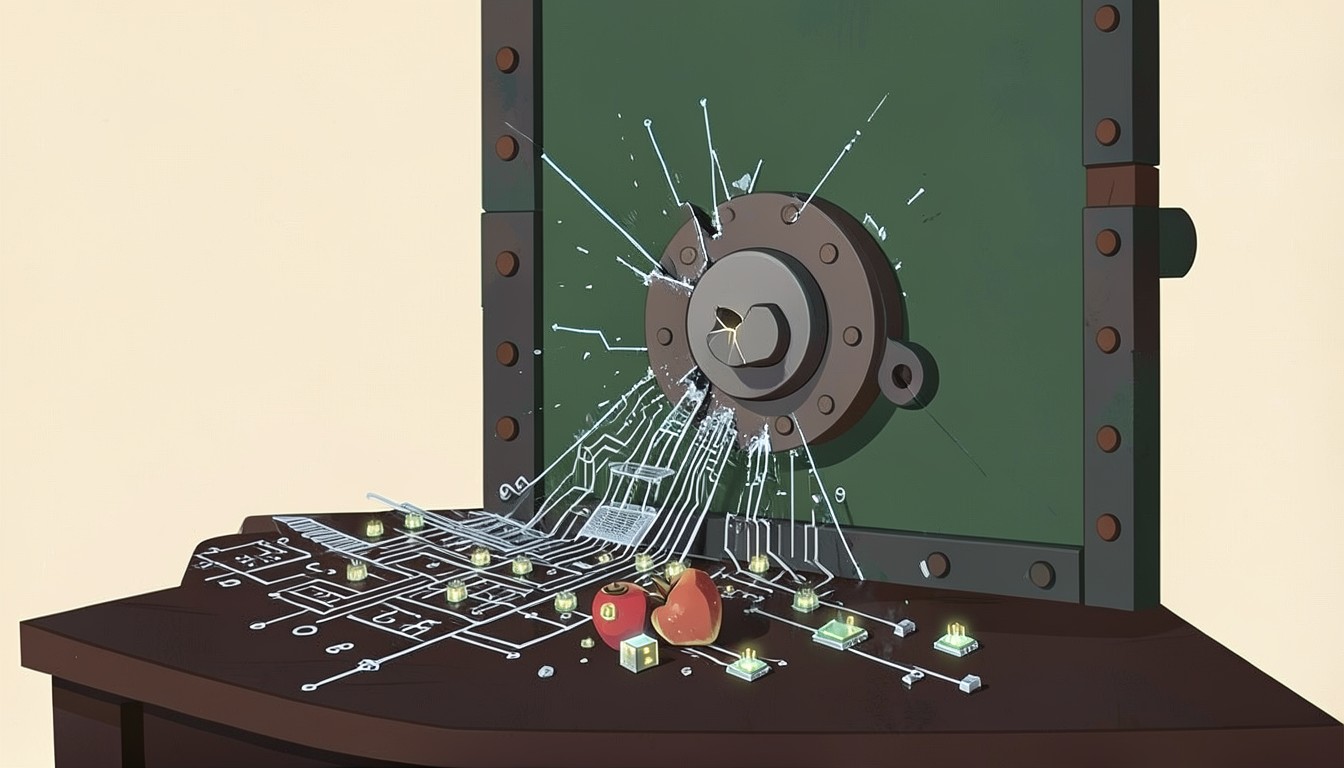
Apple has escalated its legal battle with OpenAI, submitting what it describes as shocking evidence that a former engineer carried proprietary chip designs and internal tools to the artificial-intelligence startup. The filing landed after Chang Liu’s counsel turned over his old Apple MacBook earlier this month, giving the Cupertino company its first direct look at the device since Liu departed for OpenAI.
The laptop and the allegations
Forensic review of the machine, according to Apple, shows Liu referenced a confidential circuit schematic while working at OpenAI and used a utility that bears the same name as an internal Apple engineering application. The company argues the laptop represents only a fraction of the material OpenAI has produced, and only after weeks of delay, and that the findings rebut any suggestion Apple is on a fishing expedition. Apple also alleges Liu recruited OpenAI colleague Yu-Ting Peng in June to help wipe data once he learned an investigation was underway.
OpenAI’s counter-narrative
OpenAI has pushed back through a blog post, asserting Liu accessed Apple systems after his departure solely to assist former teammates who requested help. The startup characterizes the dispute as a residual-access problem caused by Apple’s own failure to revoke credentials promptly when employees leave. Apple disputes that framing, contending Liu exploited a rare, previously unknown authentication bug to maintain entry.
The numbers behind the dispute
The scale of personnel movement adds weight to Apple’s concerns. Its initial complaint noted more than 400 former Apple staffers now work at OpenAI, a figure that underscores why the company is seeking expedited discovery and a preliminary injunction to halt any hardware development that might rely on its technology. The injunction would freeze OpenAI’s ability to advance projects tied to Apple’s trade secrets while the case proceeds.
What comes next
The evidence remains under seal, so the public cannot evaluate the schematic or the tool directly. A hearing on the injunction and the fast-tracked discovery request will determine whether Apple’s latest submission moves the needle or simply expands a paper war that has already produced text messages, complete with crying-laughing emojis, in which Liu acknowledged he still had access to Apple files.