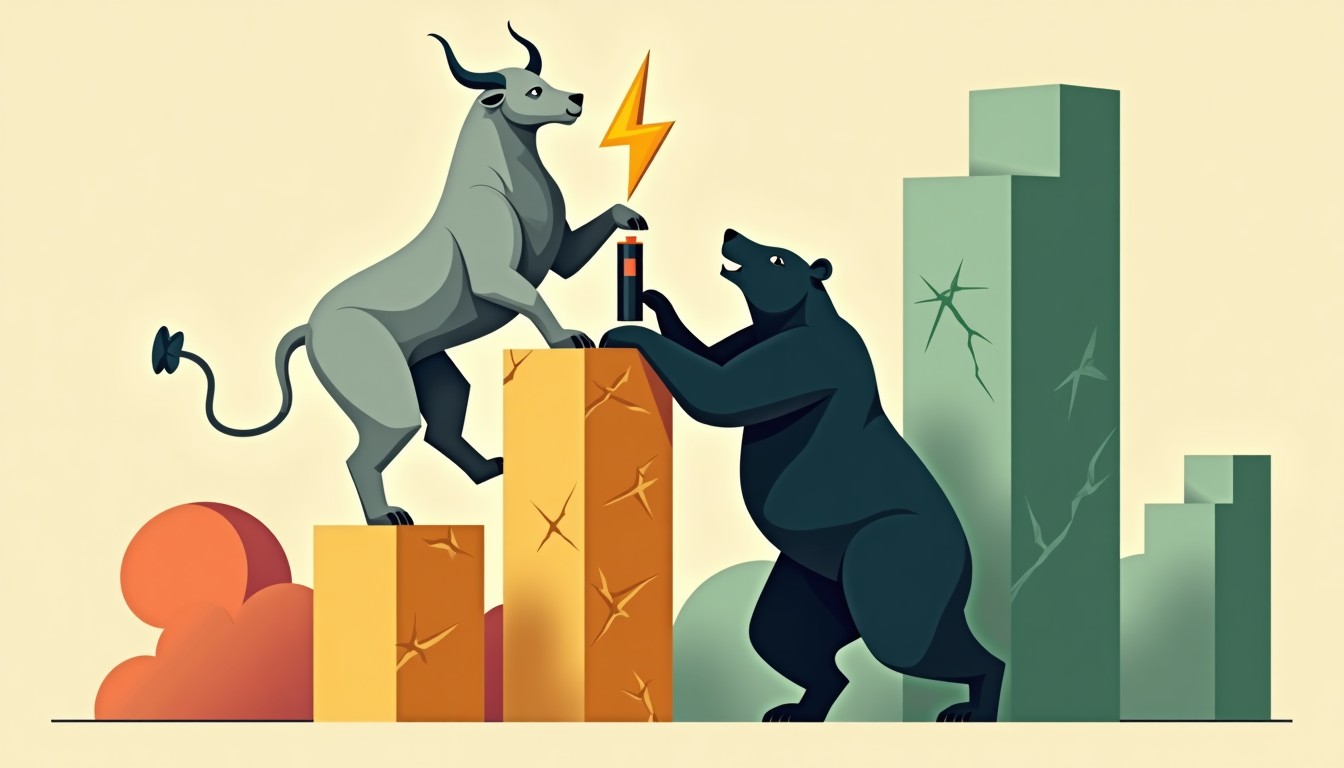
Tesla shares trade at 331 times trailing earnings while net income slipped 5 percent to $1.1 billion in the second quarter, a valuation that demands flawless execution the company has yet to deliver.
The valuation disconnect
Revenue rose 26 percent year over year in the quarter, but the profit decline came alongside cost cuts that compressed margins. The demand improvement management highlighted was partly manufactured through price reductions that flow straight to the bottom line. Paying a triple-digit multiple for a business whose earnings are moving backward is a bet on narrative, not arithmetic.
The China problem
BYD has emerged as the most credible threat to Tesla's dominance, outpacing it in global EV volumes and pressing the price war that forced Tesla's margin sacrifice. The competitive pressure shows up in the numbers before it shows up in the story, and the margin trajectory suggests the pressure is intensifying rather than easing.
The pivot to robotaxis and robots
With the core auto business under siege, Tesla has redirected its growth pitch toward Cybercab robotaxis and Optimus humanoid robots. The robotaxi timeline has a history: Musk promised one million robotaxis by 2020, then said a ride-hailing service would cover half the country by 2025. Neither materialized. The Cybertruck also fell short of initial projections. The current plan relies on a vision-only approach that skips LiDAR, a technical bet regulators have not yet blessed and rivals have not adopted.
What to watch
Optimus has no commercial timeline. The robotaxi service has no launch date. The auto business has no margin floor. At 331 times earnings, the stock prices in a future that keeps receding. Long-horizon buyers are betting on Musk's track record of eventual delivery; everyone else is paying for a promise that has missed every deadline so far.