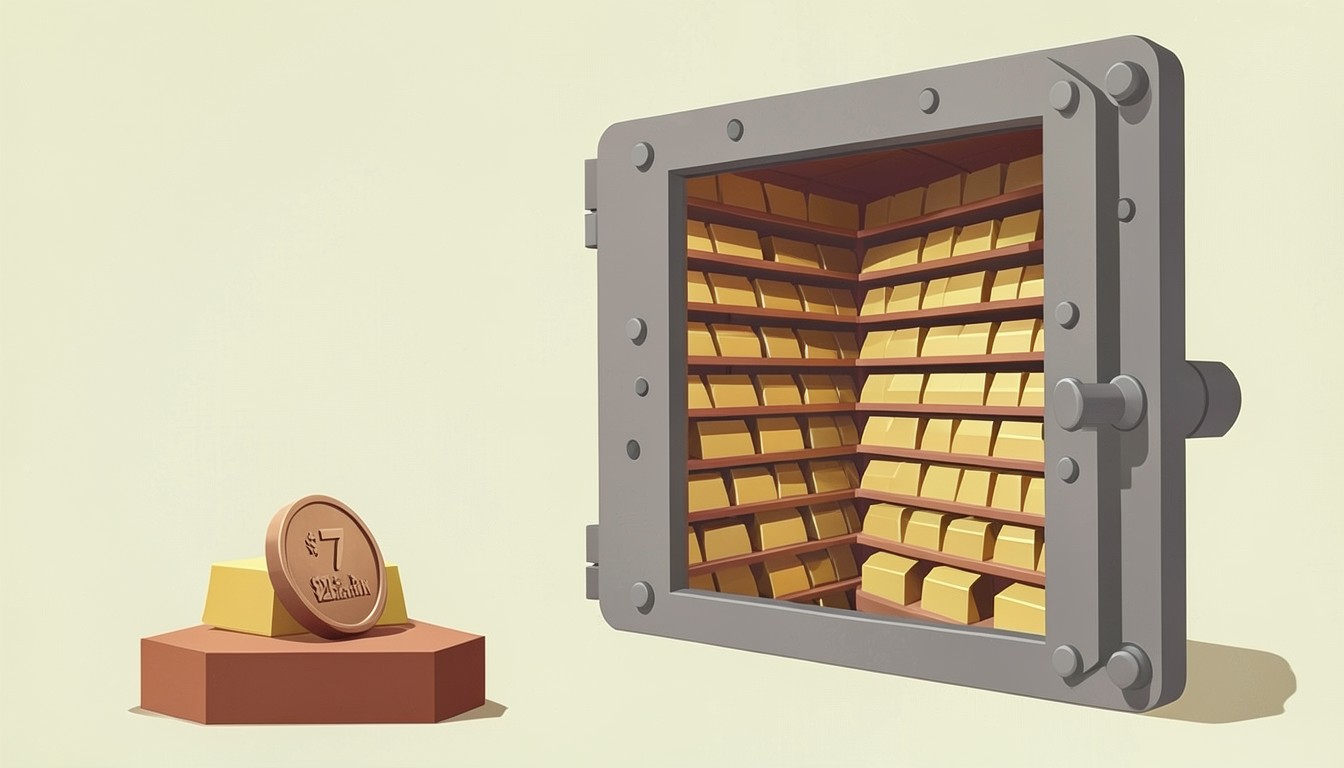
Warren Buffett's first federal tax bill came to $7. The return, filed in 1944 when he was 14, showed $592.50 of income from a Washington, D.C. paper route and three shares of Cities Service Preferred. Eighty years later Berkshire Hathaway wrote a check for $26.8 billion, the largest single corporate tax payment on record at the time. The arc from a teenager's bicycle deductions to a ten-figure Treasury transfer frames the longest-running argument in American capital: whether the people who win the game are paying enough to keep the board in play.
The paperboy's return
The 1944 filing, shared with PBS NewsHour in 2017, is a masterclass in early optimization. Buffett earned $364 delivering the Washington Post and the Washington Times-Herald past the homes of six senators and a Supreme Court justice. Another $228 came in interest and dividends, he had been investing since age 11. He deducted $10 for watch repair and $35 for bicycle expenses, lowering taxable income like a seasoned Schedule C filer. Adjusted for inflation, the $592.50 gross becomes $11,406.65 and the $7 liability becomes $134.76. Buffett has said he has filed every year since. "Though, being a slow starter, I owed only $7 in tax that year," he noted in 2016.
The corporate bill
Berkshire's 2024 payment arrived in the annual shareholder letter as a point of pride rather than grievance. Buffett wrote that before he took control in 1965 the company "did not pay a dime of income tax," which he called "an embarrassment." He added that such behavior might be understandable for glamorous startups but is "a blinking yellow light when it happens at a venerable pillar of American industry." The $26.8 billion figure is not a statutory rate boast; it is a cash-transfer receipt. The company's effective rate has hovered near the statutory 21 percent in recent years, but the absolute dollar amount dwarfs the combined liability of entire S&P 500 sectors.
The argument
Buffett has spent decades arguing that his marginal rate is lower than his secretary's. The 1944 return shows a 14-year-old paying 1.2 percent of gross income. The 2024 Berkshire payment represents roughly 19 percent of the conglomerate's pre-tax earnings, according to the letter's disclosed figures. The gap between the two numbers is not a loophole; it is the difference between a progressive individual code riddled with preferences and a corporate code that taxes profits after a thicket of deductions, credits, and deferrals. Buffett's position is that the second system lets capital compound faster than labor, and that the $26.8 billion, while historic, is still a fraction of what a truly progressive structure would extract.
What to watch
The next shareholder letter will reveal whether 2024's record holds. Berkshire's cash pile topped $325 billion at mid-year, and the portfolio's unrealized gains remain enormous. If the company realizes more of those gains, the 2025 payment could exceed the 2024 mark without any change in tax law. Meanwhile, the expiration of the 2017 individual cuts at the end of 2025 will test whether Buffett's own marginal rate finally rises above the corporate effective rate he has criticized for decades. The paperboy kept his receipts. The conglomerate keeps its ledger. The Treasury keeps the difference.