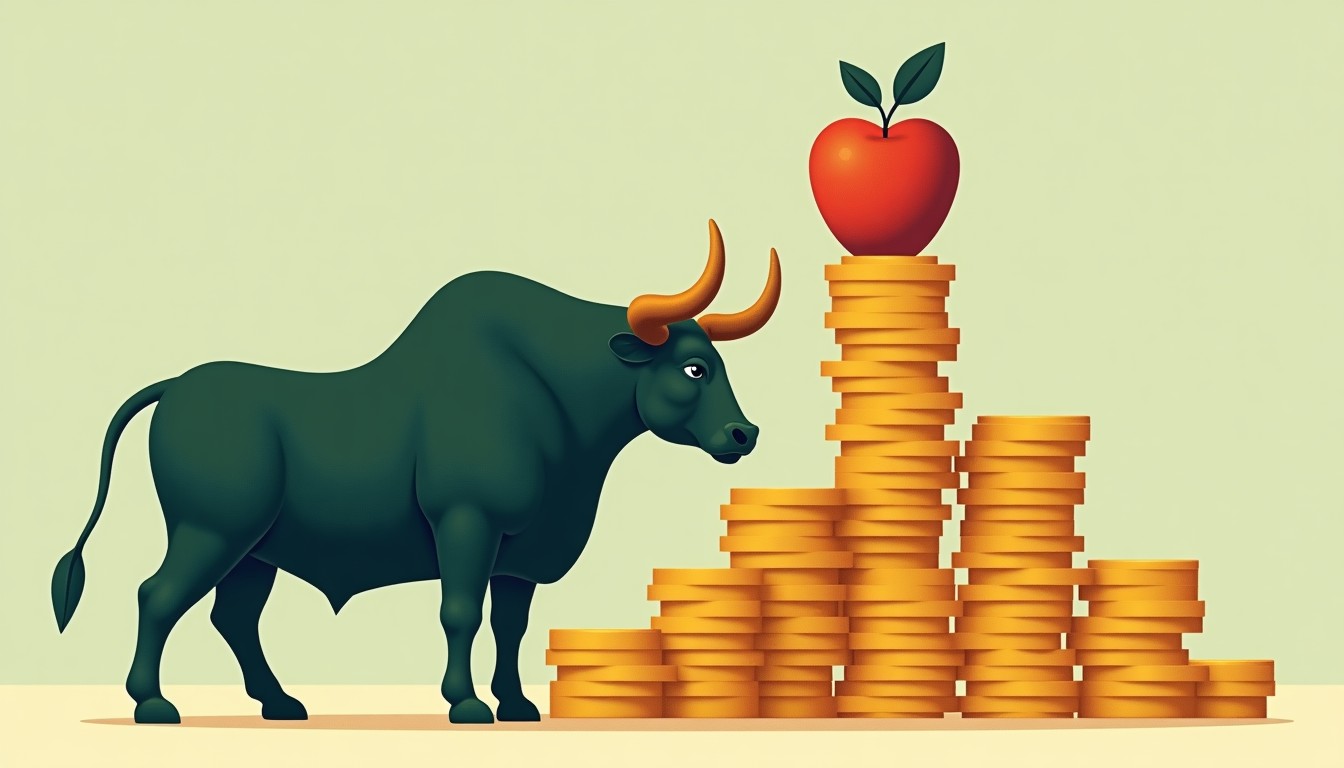
Greg Abel has made Alphabet the third-largest holding in Berkshire Hathaway’s $359 billion equity portfolio, deploying $17 billion in the second quarter to overtake Coca-Cola by a margin of $16 million as of the August 25 close. The purchase, which includes a $10 billion private placement announced alongside the open-market buying, marks the most decisive portfolio action since Abel succeeded Warren Buffett as chief executive on December 31.
The portfolio turnover
Abel cleared 16 positions in his first quarter at the helm, a pace of turnover that contrasts with the multi-decade holding periods associated with his predecessor. The reshuffle has demoted both Coca-Cola and Bank of America from the top-five lineup, though the rationale for each exit differs. Coca-Cola remains an “indefinite” holding per Buffett’s designation, and Abel has said he will largely follow the same principles. Bank of America, by contrast, has been reduced for eight consecutive quarters.
Coca-Cola stays, Bank of America fades
The Coca-Cola stake, held since 1988, carries a cost basis of roughly $3.25 per share against a current annual dividend of $2.12, implying a yield on cost of 65 percent. That arithmetic makes the position effectively immovable regardless of portfolio strategy. Bank of America presents a different calculus: Berkshire’s initial preferred investment in August 2011 was made at a 62 percent discount to book value; the common shares now trade at a 59 percent premium. The re-rating has removed the valuation argument that originally underpinned the position.
The Alphabet bet
Alphabet’s ascent reflects a concentrated wager on search dominance and cloud acceleration. Google has captured 89 to 93 percent of global search traffic for the past decade, and YouTube ranks as the second-most-visited social platform. The second-quarter results underscore the operating leverage: revenue rose 24 percent year on year to $119.8 billion, operating margin expanded two percentage points to 34 percent, and Google Cloud revenue surged 82 percent to $24.8 billion with a 36 percent operating margin, up 15 percentage points. YouTube advertising grew 13 percent to $11.1 billion.
What to watch
The $10 billion private placement terms, pricing, lock-up, governance rights, have not been disclosed. Whether Abel continues to add at current multiples or shifts to other AI-adjacent monopolies will signal whether this is a tactical overweight or a structural reorientation of Berkshire’s capital allocation framework.