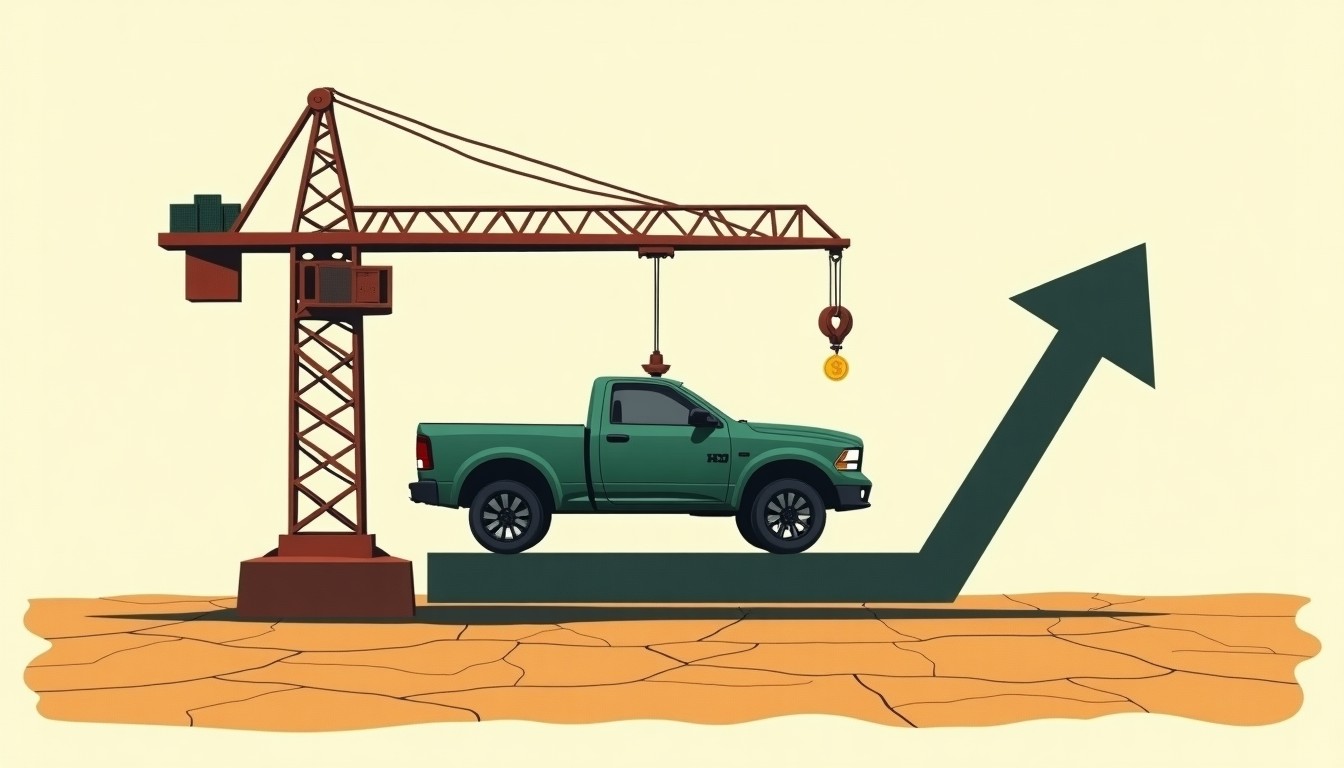
Toyota Motor said Monday it will invest $3.6 billion to move production of its Tacoma midsize pickup from a plant in Tijuana, Mexico, to its San Antonio manufacturing campus, a bet on domestic capacity that coincides with a shift in North American trade policy. The expansion is expected to create 2,000 jobs and lift the Texas plant's annual output to 350,000 units from roughly 200,000 by 2030, roughly doubling the footprint of the 2.7-million-square-foot facility.
The outlay is part of a broader pledge to deploy up to $10 billion more in the United States through 2030 than previously planned. It arrives less than a week after the Trump administration confirmed it would not extend the existing trilateral trade pact with Canada and Mexico, opting instead for annual reviews. A Toyota spokeswoman said Tacoma production will transfer from Tijuana to Texas over the next four years while the company maintains operations in Mexico, including continued Tacoma output at its Guanajuato facility.
The decision reverses a course set more than six years ago, when Toyota confirmed it would shift Tacoma production from San Antonio to the then-new Guanajuato plant. The Texas campus currently builds the Tundra full-size pickup, including a hybrid variant, and the Sequoia SUV hybrid. A separate $531 million rear-axle plant on the same site, spanning 500,000 square feet, is slated to start production this fall.
The capacity boost could help Toyota, already the world's largest automaker by volume, close the gap with General Motors in U.S. sales. Cox Automotive forecasts Toyota will narrow the deficit this year as hybrid demand rises and all-electric adoption slows. Through the first half of the year, Toyota deliveries rose 0.5 percent compared with 2025 to 1.24 million vehicles, while GM sales fell 6.8 percent to 1.34 million.
Toyota's gains have come as it rolls out new models, including battery-electric variants, while doubling down on the hybrid technology it has led for decades. GM, by contrast, has treated hybrids as transitional and concentrated its electrification push on a full lineup of battery-electric Cadillacs and other brands, leaving the Corvette as its only hybrid. With the San Antonio expansion now formalized, previously reported as Project Orca, the next test is whether the added volume translates into sustained market-share growth as trade rules evolve.