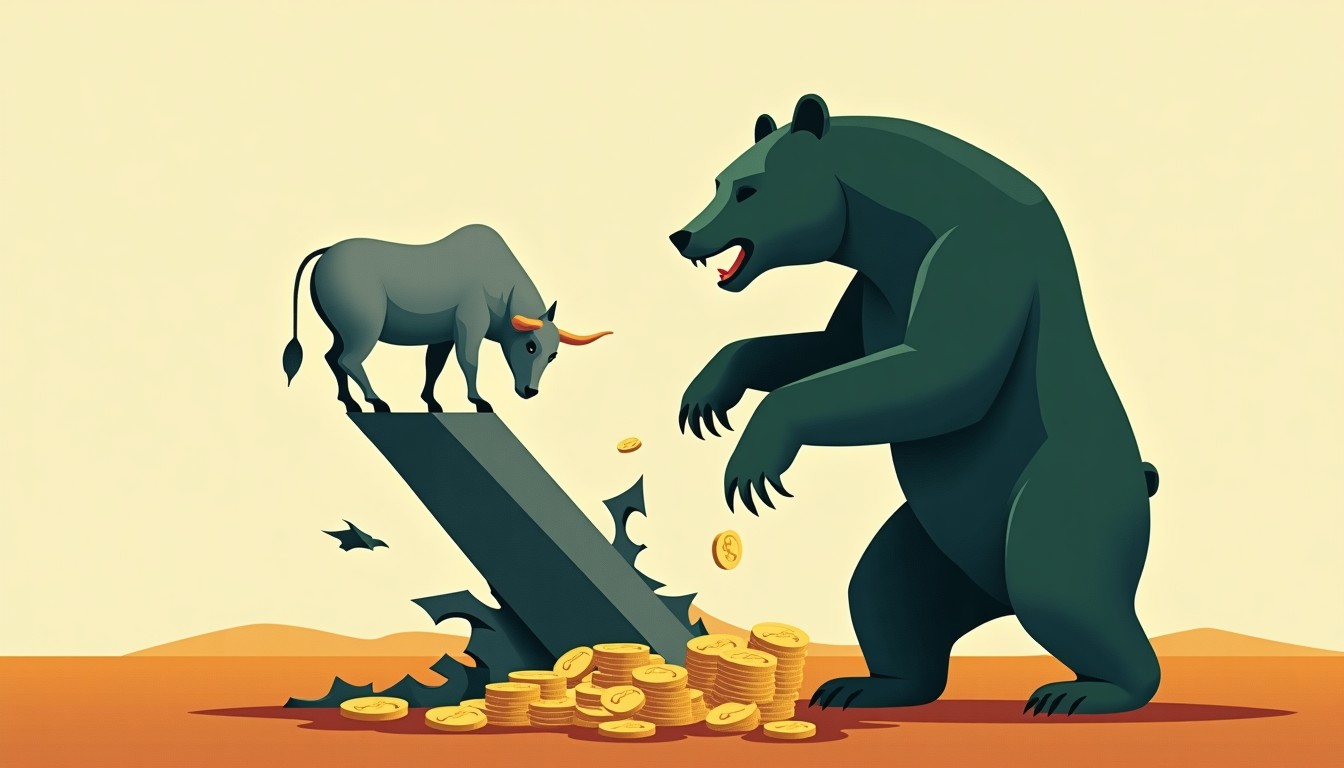
Tesla shares dropped as much as 15 percent Thursday, their worst intraday slide in more than a year, after a second-quarter profit miss rekindled doubts about the electric-vehicle maker’s artificial intelligence and robotics bets, handing short sellers about $4.12 billion in single-day mark-to-market profits, according to S3 Partners managing director Ihor Dusaniwsky. The move left the stock down nearly 30 percent for 2026, giving bears paper gains of roughly $8.92 billion year to date on a short position that amounts to just 3 percent of shares outstanding.
The valuation problem
The selloff exposed a valuation that has long lived on borrowed narrative. At 151 times estimated earnings over the next twelve months, Tesla remains the most expensive member of the Magnificent Seven and its worst performer this year. BNP Paribas analyst James Picariello reiterated a sell-equivalent rating and a $280 price target, arguing that the market has embedded a significantly high bar for an AI progress ramp that is proceeding on an exceedingly aggressive capex timeline. Softer-than-expected automotive margins have only sharpened the question of whether the core business can sustain the outlays required for robotaxis and humanoid robots.
Retail buyers disagree
Not everyone is heading for the exits. Tesla was the most-bought stock among retail traders Thursday, drawing $42 million in net purchases, according to Vanda Research’s Viraj Patel. Morningstar analyst Seth Goldstein sees the pullback as a good opportunity for long-term investors, maintaining a $450 fair value target and a conviction that strong growth lies ahead. The divergence is stark: one camp sees a company pouring cash into AI projects with uncertain payoffs while underspending on the very robotaxi and robot ambitions that justify the multiple; the other sees a discounted entry point for a franchise that has defied skeptics before.
What matters next is whether the automotive margin trough is cyclical or structural, and whether the capex trajectory produces a visible AI revenue stream before the market loses patience with a 150-times-earnings bet. The short side has been handed a convincing day, but the retail bid suggests the narrative war is far from settled.