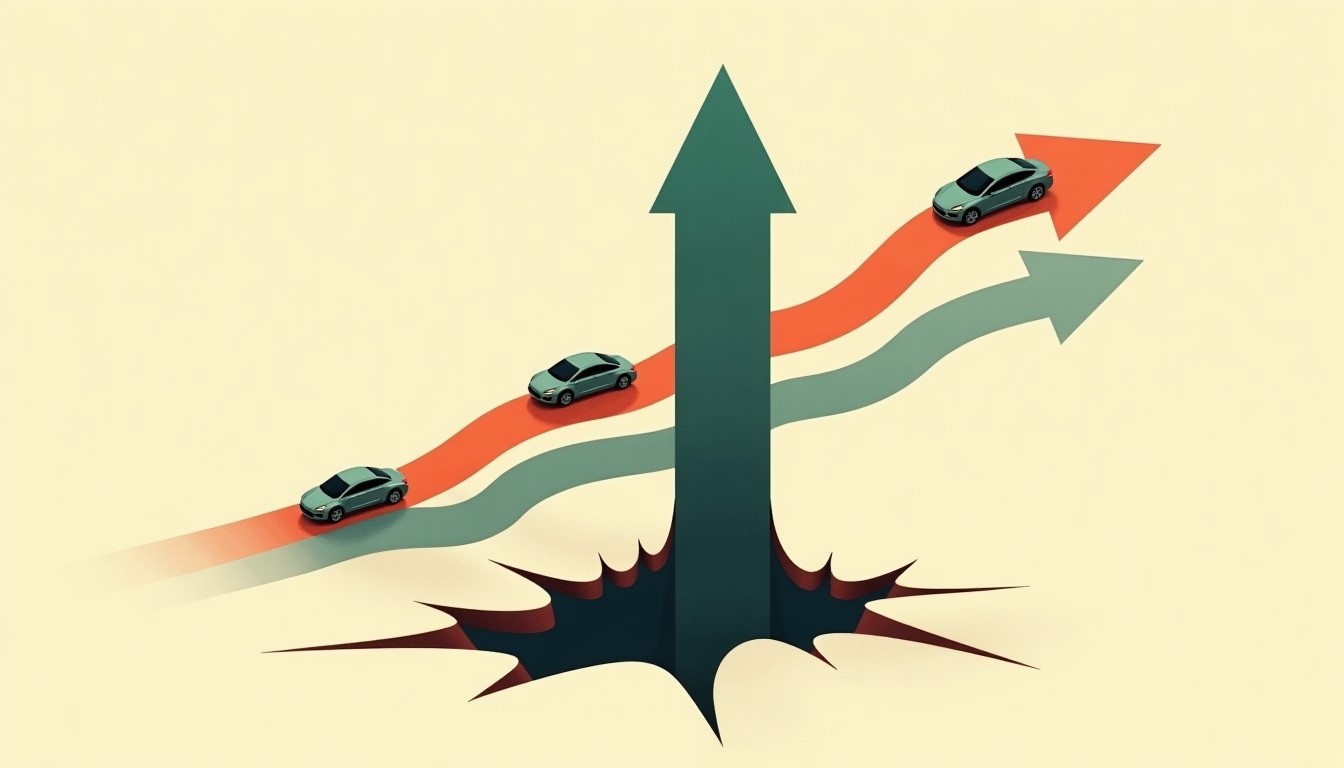
Tesla delivered 480,126 vehicles in the second quarter, a 25% increase from the same period a year earlier, though the comparison is distorted by last year's political backlash and shifting incentives that depressed the baseline.
The baseline is the story
The year-over-year gain of roughly 96,000 units looks impressive until you remember that 2025 was the year Elon Musk's political involvement triggered consumer backlash, vandalism of stores and vehicles, and a mess of government incentive changes that both supported and depressed demand. The second quarter of 2025 was not a normal quarter. It was a trough. Measuring from a trough makes any recovery look like a surge.
US dominance remains intact
In the United States the Model Y and Model 3 remain the highest-selling EVs by a wide margin. The next closest competitors from traditional automakers sell a fraction of those volumes. That franchise still prints cash, and cash is the only thing that funds the next act.
Global picture shows BYD ahead
Globally the Model Y is the best-selling EV, which makes sense for a lower-cost mass-market vehicle. The Model 3 barely cracks the top 10. Asian competitors occupy the space between them. BYD now holds multiple spots in the global top 10 and has claimed the title of world's largest EV seller. Tesla appears willing to cede that crown.
Robots need cash
The Optimus humanoid robot program is expensive. EVs are the backstop. Tesla cannot simply stop making cars while it builds a robot business line. The delivery rebound, however flattered by last year's chaos, keeps the cash flowing. That is the only number that matters for what comes next.