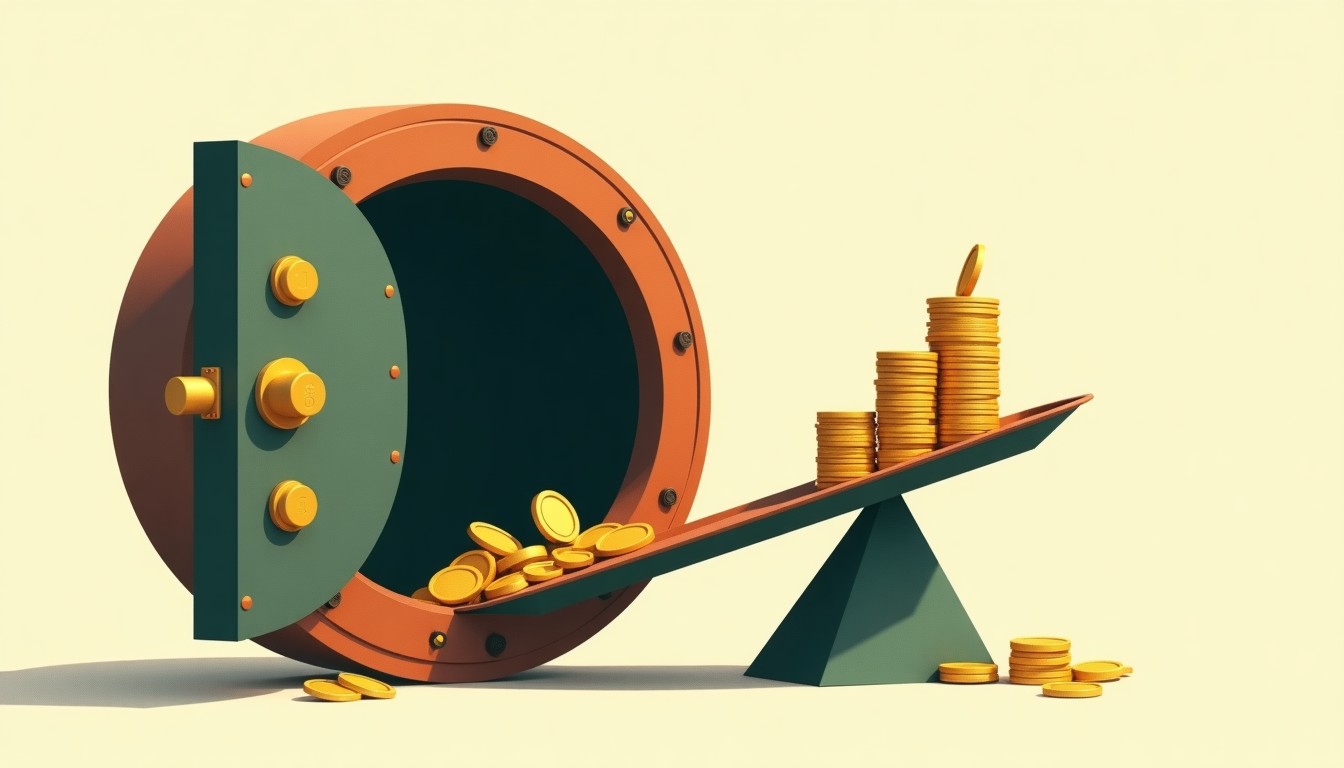
PayPal shares jumped 23 percent this week after Stripe and private equity firm Advent International put a $60.50-a-share price tag on the payments giant, giving the market its first concrete number after months of deal chatter. The offer values the company at a modest 10.5 times earnings even after the pop, a multiple that suggests the market had already priced PayPal as a slow-growth utility rather than a compounder.
Reuters reported that PayPal’s board, citing a person familiar with the matter, views the bid as too low given the turnaround plan management is executing. That stance is not academic: Michael Burry, the investor made famous by “The Big Short,” has argued publicly that intrinsic value sits closer to $110 or $115, roughly 80 percent above the offer. His math rests on a sum-of-the-parts view that treats Venmo, Braintree and the financial-services suite as distinct assets rather than a single legacy franchise.
Venmo is the piece that complicates the arithmetic. The peer-to-peer app now counts nearly 100 million users and has posted double-digit total payment volume growth for six consecutive quarters, a trajectory that stands in sharp contrast to the flagship checkout business. Stripe, whose own valuation has swung violently in private markets, would effectively be buying a growth engine bolted onto a mature cash cow, and paying a price that assumes the engine is worth nothing.
The board’s rejection, if it holds, sets up a familiar standoff: a strategic buyer with a clear integration thesis versus a management team convinced the market is misreading the asset quality. Advent’s presence adds financial engineering to the mix, but the $60.50 figure still looks like an opening bid dressed up as a final offer. Shares have already retraced some of the week’s gain, signaling that the street is pricing in a higher number, or a broken deal.
What comes next is a test of whether PayPal’s turnaround metrics can survive public scrutiny long enough to force a sweetener. Venmo’s volume trajectory is the only number that matters; everything else is negotiation theater. If the board can prove the app’s monetization runway is longer than the market thinks, the $60 handle becomes indefensible. If not, the stock settles back into the value trap it occupied before the letter arrived.