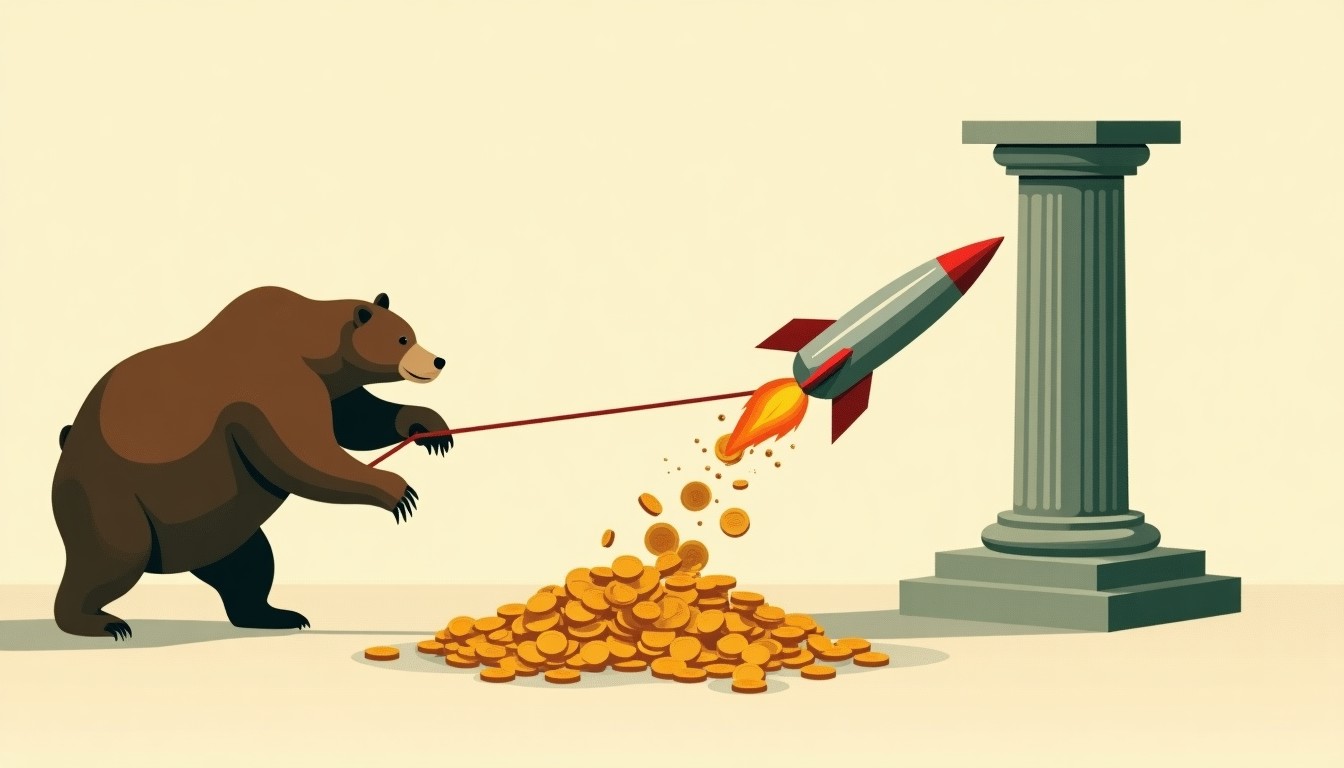
Short sellers targeting SpaceX have accumulated an estimated $8.7 billion in paper profit since the company's initial public offering last month as the stock slipped below its IPO price, according to data from Ortex Technologies. The bearish bets have paid off after shares retreated from a post-IPO high of $225.64 toward the $135 offer level, handing short sellers a rare win against a company closely tied to Elon Musk.
SpaceX shares have traded in a wide range since debuting, experiencing brief rallies before sliding back. On Wednesday the stock dropped below its IPO price for the first time before recovering to close just above that level, a move that underscored the volatility that has characterized its early public life. The decline reflects in part investor concern over the company's debt-funded spending on artificial intelligence infrastructure.
Almost half of SpaceX's tradable shares, about 49 percent of the free float, are now out on loan, Ortex said. Co-founder Peter Hillerberg said most of that lending is likely short selling and that bears kept adding to positions all the way down rather than taking profits. The sizable short position means every dollar the stock moves is worth more than $300 million to the short side, a dynamic that could amplify swings in either direction.
The bearish conviction runs up against strong retail and institutional demand for the stock as well as Musk's long history of public battles against short sellers, factors that have historically made betting against his companies a hazardous proposition. SpaceX's lofty valuation has drawn skepticism, but the same enthusiasm that drove the shares above $225 after the offering could reassert itself quickly.
Shares rose about 1 percent to $136.28 on Thursday, leaving them just above the IPO price. With short interest at elevated levels and the company's capital-intensive AI plans still unfolding, the stock remains primed for sharp moves driven as much by positioning as by fundamentals.