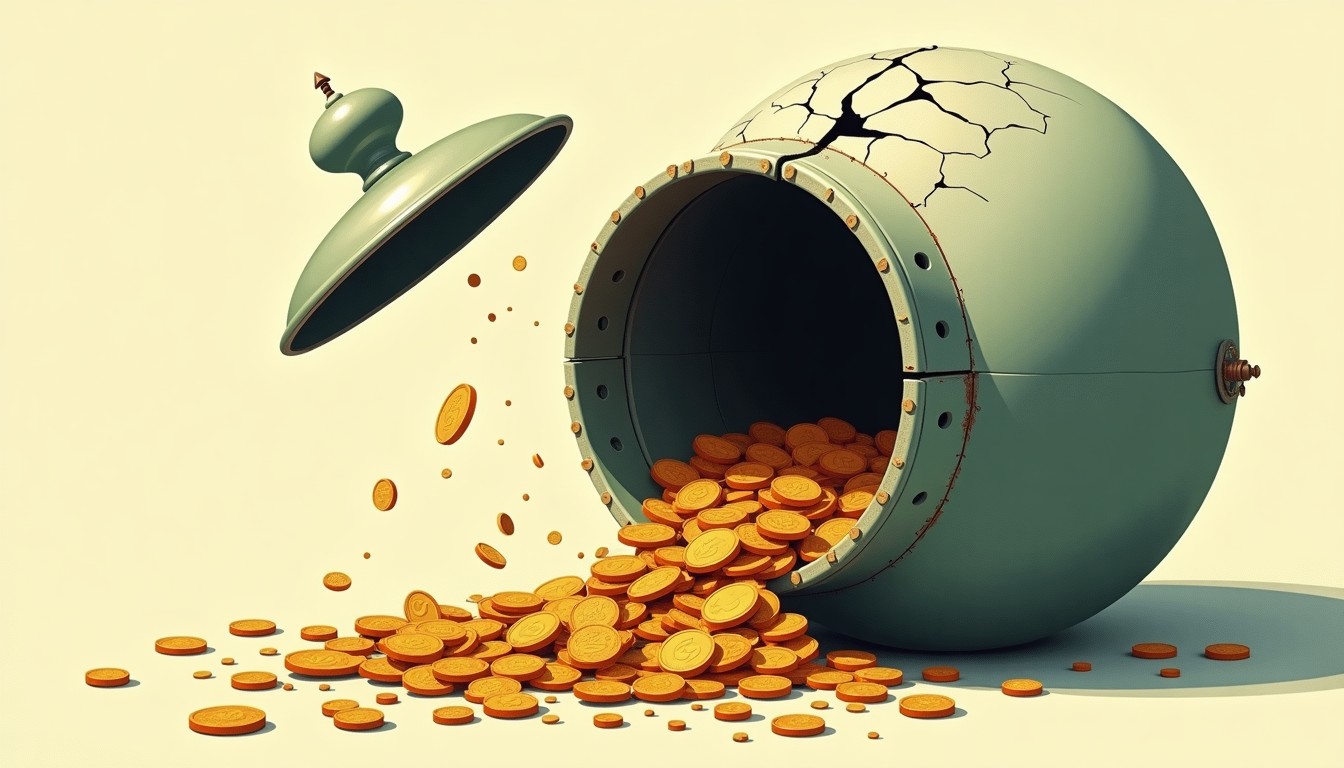
Johnson and Johnson agreed Monday to pay an estimated $5.5 billion to resolve roughly 76,000 lawsuits claiming its baby powder caused ovarian cancer, a deal that could swell to $7 billion or more and marks the likely end of a decade-long legal war. The settlement covers nearly all outstanding ovarian-cancer claims consolidated in federal court in New Jersey and related state cases, and it requires 95 percent participation to become final. For a company that has spent years arguing its talc was safe and asbestos-free, the payout is the price of putting the litigation behind it, and doing so on an accelerated 18-month timeline rather than stretching payments over more than ten years.
The numbers and the structure
The company expects to pay $3 billion in 2027 with the remainder in 2028, though the total is uncapped because the agreement assigns specific values to each qualifying claim rather than setting a hard ceiling. Chris Seeger, a lead plaintiffs’ attorney representing about 2,500 claimants, told Reuters the final bill could reach $7 billion or higher depending on participation. That open-ended design is unusual: most mass-tort settlements cap the defendant’s exposure. Here, J&J traded a cap for speed and finality, and the exclusion of future claims freed up more money for current plaintiffs.
The legal backdrop
The deal follows a string of courtroom wins for J&J, including a ruling last week in which a federal judge cast doubt on individual plaintiffs’ ability to prove talc specifically caused their ovarian cancer. The company also secured victories disqualifying plaintiffs’ lawyers and striking expert testimony. Its trial record has been mixed, outright wins in some cases, verdict reductions on appeal, but also a multibillion-dollar judgment in a case brought by 22 women. An earlier attempt to offload liability through a subsidiary bankruptcy failed. J&J stopped selling talc-based powder in the U.S. in 2020, switching to cornstarch.
What the company says
J&J denies wrongdoing. Worldwide litigation chief Erik Haas said the company was confident it would ultimately prevail, as it has in the vast majority of cases tried to date, but that the settlement lets it focus on developing medicines and devices. The plaintiffs’ bar calls it fair. Seeger said his clients will be happy. Both sides have an incentive to declare victory, J&J gets certainty and a defined exit; the lawyers get paid and move on.
What comes next
The 95 percent acceptance threshold is high but not unprecedented in mass torts. If reached, payments flow within 18 months. If not, the litigation grinds on. The settlement does not cover future claims, leaving the door open for new lawsuits, though the evidentiary rulings stacking up against plaintiffs make those harder to bring. For J&J, the $5.5 billion to $7 billion range is a known quantity, baked into the cost of doing business. The market has largely priced it in. The real test is whether the company can finally stop talking about talc and start talking about the pipeline.