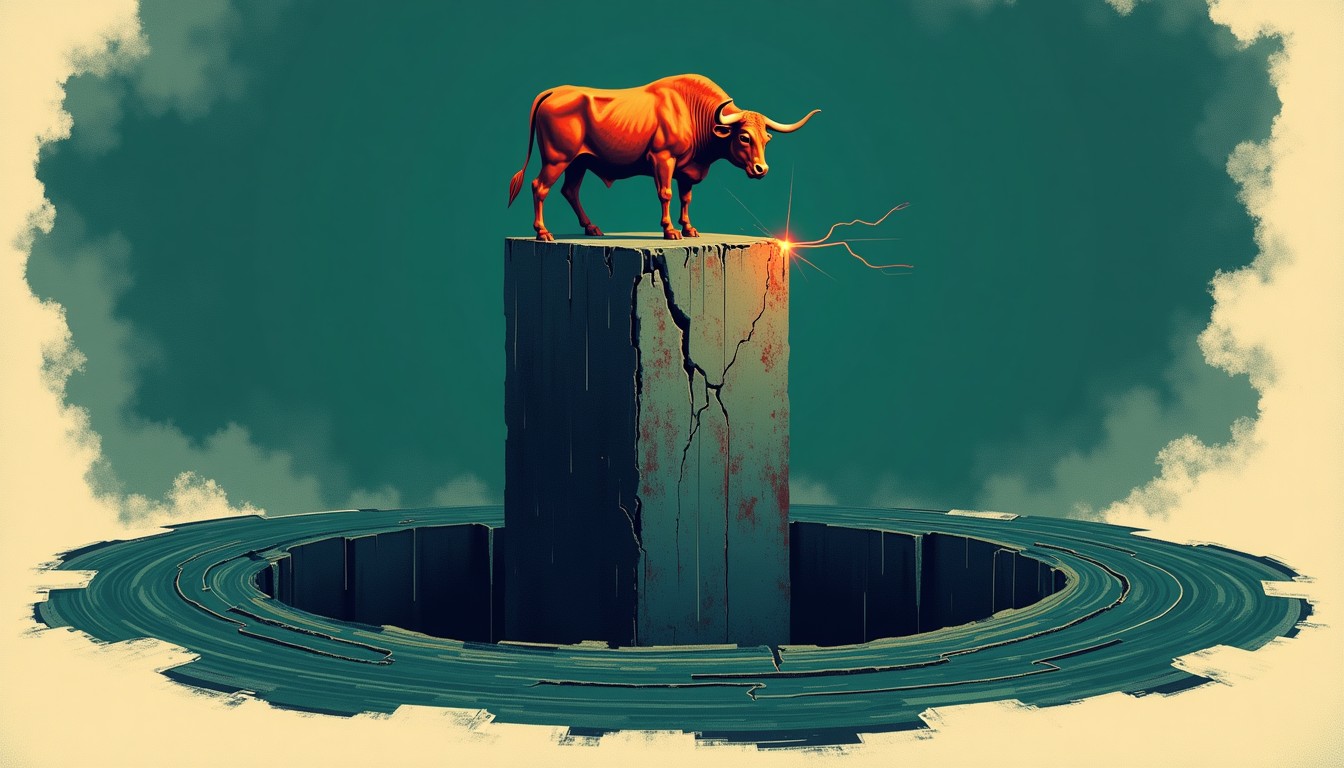
Michael Burry, the hedge fund manager who made $700 million betting against the U.S. housing market before the subprime crisis, has reiterated his short positions against Nvidia, Palantir, Micron Technology and the iShares Semiconductor ETF, warning in an August Substack post that the market rally could end in a 1987-style crash. This week he added on X that the AI industry's own calls to slow model development for safety are a "cover for real uncontrollable slowing growth."
The 1987 parallel
Burry's reference to 1987 is not new. He has argued for months that the concentration of gains in a handful of AI names mirrors the fragile leadership that preceded Black Monday. The S&P 500 has climbed for three calendar years and into 2026, powered largely by excitement over artificial intelligence and the tailwind of interest-rate cuts. Yet the Shiller CAPE ratio, an inflation-adjusted price-to-earnings measure, has reached a level it has surpassed only once before, during the dot-com bubble.
The valuation backdrop
Those valuations have not gone unchallenged. Investors have periodically questioned whether the billions flowing into AI infrastructure are being deployed too fast, and whether earnings can justify prices at these multiples. Nvidia, the poster child of the boom, is still heading for an annual gain but slid in the first quarter of the year. Rising inflation and geopolitical turmoil in Iran have also interrupted momentum for growth stocks at various points.
The counter-argument
The case for staying invested rests on fundamentals that remain intact. Chip designers and cloud providers continue to report soaring demand, translating into enormous earnings growth. As AI moves from infrastructure build-out to real-world application, the revenue base could widen rather than contract. Near-term headwinds may cap the explosive short-term returns investors grew used to, but the long-term trajectory still points up.
What to watch
Burry's track record gives his warnings weight, though his housing bet took years to resolve in his favor. The next test is whether the AI leaders' public call to slow model development for safety coincides with a genuine deceleration in capital expenditure or order flow. If spending growth slows while valuations stay elevated, the 1987 analogy starts to look less like hyperbole.